
Also, "You're not always doing your kid a favor by sharing adult-oriented media with them."
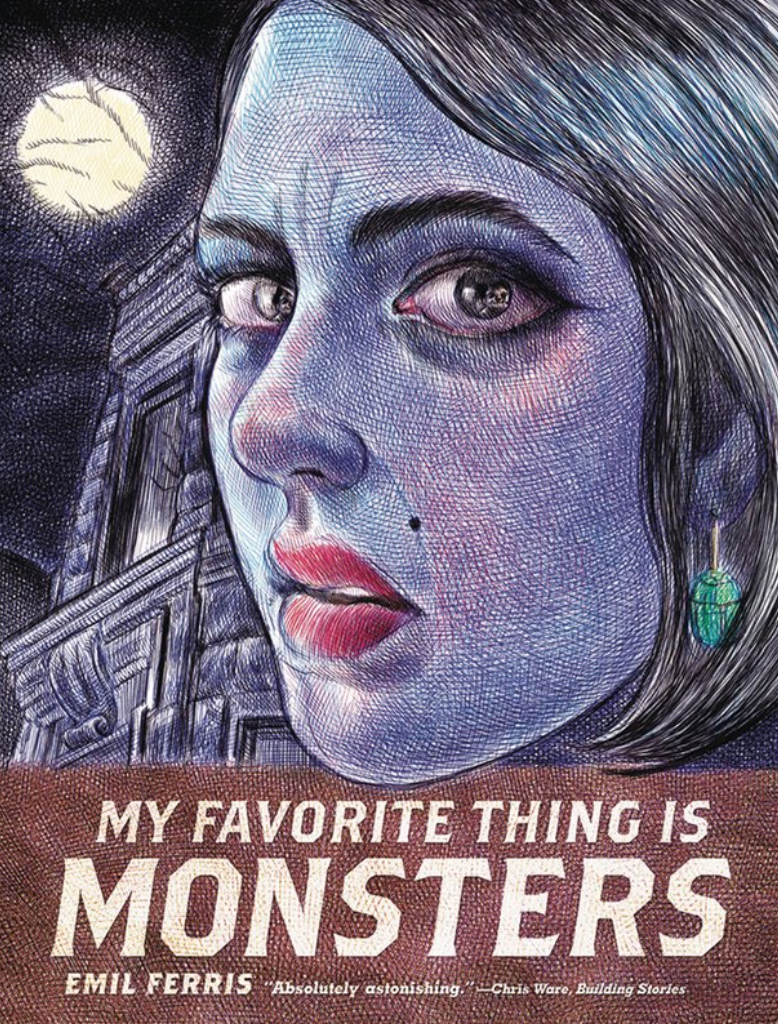
Note: This discussion has a couple mentions of pedophilia & child sexual assault below the cut.
Recently, the Nextlander podcast had as a guest Patrick Klepek, who is the only former member of the Giant Bombcast besides Voidburger to know anything about horror. (Alex knows about Hellraiser, but not for horror-related reasons.) He spent a good deal of his appearance talking about taking his nine-year-old daughter to The Backrooms. The account caused some controversy, as while Klepek was extremely eager for his kid to see her first R-rated horror movie, his daughter, from his account, did not seem to share his enthusiasm, taking a blanket and stuffed animal with her to the showing. (Klepek gave her some nominal outs but seems to have put a lot of indirect pressure on her, presenting it as a test of courage and emphasizing that he thought she wanted to do this.)
The existence of the controversy is notable in itself, as the Giant Bomb community (by which I mean the followers of the founding members' various current projects) is hyper-protective of its personalities. Part of this is plain parasociality; part of this is genuine gratitude to people who have entertained them for many years; part of this is due to certain dynamics present in Giant Bomb's dying days, where the hosts were caught in a bunch of now-detailed struggles with management and took out those frustrations on their audience, and the diehard fans would rail at everyone else for making their dads fight until only the diehards remained, or at least dominated the conversation. In any event, Vinny opened the most recent podcast with an account of how he took his own daughter to The Backrooms with no problems, in what seemed to be a show of support for Klepek.
This situations aren't equivalent, though: Vinny mentioned that his daughter is older—twelve years old as opposed to nine—and that she actively wanted to see The Backrooms. Nevertheless, the move has mobilized the diehards in force with the party line that everyone needs to shut up and if you're not taking your kid to The Backrooms, whether they want to go or not, you're committing child abuse!
Now, before I delve into this, let's take a couple common defenses I've already seen in this discussion off the table:
Read more: Unpopular Opinion 1: It's OK if your kid isn't into the things you like.
In brief: my server upgraded its FTP, and my version of my blogging platform wasn't compatible with it. The long-term solution is to make a switch, but with assistance from a helpful person at my ISP (thank you, George), a short-term solution has been implemented, minus a couple features (comments, for one). The long-term solution will take a bit, though, as it involves a bit of prep work, and there's a lot going on in my life currently.
In the interim, though: I've got a small backlog of posts on recent - well, semi-recent - controversies in gaming. A three-part series! Call it a mini-Blaugust!
There's someone combing through this site and my social media in a desperate bid to prove that I leaked material from one of my professional projects. That's a fool's errand, because, uh, I didn't leak anything. I'm not exactly new at this. You don't get hired if you breach confidentiality. I can weather life without ever knowing the fleeting approval posting NDA material would get me from 4chan. Despite this, someone is as of this writing going "look! look! look what they're doing!" really hard on Microsoft Teams.
To assist in the "look! look!"s, I've compiled a list of the worst behavior recently evidenced on this blog.
- I posted that I played Final Fantasy II relatively recently. I may not have been on an original Famicom while playing.
- For the purposes of discussing some odd Game of the Year choices, I scanned and posted some pages from a 1995 issue of a puzzle magazine without the publisher's express permission.
- I referred to the music in Kid Icarus: Of Myths and Monsters as "dorky."
- I also referred to that GamesRadar reporter who was caping for the misogyny in that Bloober interview as a "dumbass," but let's be honest: they were being a complete dumbass.
- Not currently on the blog, but upcoming: I bought a PS5 recently. The first game I bought on it was The Casting of Frank Stone. I have previously mentioned that I bought a DS for Lunar: Dragon Song and a gaming PC for NightCry.
- I have a note back on the "best games I played in 2025" post stating that the post was incomplete and that I'd remove said note when the post was finished. I, uh, may never have gotten around to removing that warning. It was originally there because there were a couple images locked up on my Switch that I had to post. I kept it around because I was planning on adding a big aside on Lumines Arise that ended up being too long a haul just to say, "eh, the game's okay". I think the post has now slouched toward completion. The note remains scandalously up as of this writing, though.
- I once had a yellow Labrador (now passed, sadly) who got into a bark fight with Stephen King's Corgi. A family member wanted to see Stephen King's house, the Corgi (Marlowe) was on the front steps when we drove by, and my yellow Lab poked her head out the window to give him a piece of her mind. He ran to the sidewalk and eagerly engaged her in debate. Tabitha King (very nice) had to come out and pull Marlowe away from the (solely verbal) argument. I don't think I've mentioned this incident on the blog, but I think it should be noted in any accounting of my suspect activity.
- I have a number of posts on otome games. This isn't nefarious, but based on this person's activity on my social media, it really, really freaks them out.
Please make note of any other activity that should be reported in the comments.
Two projects on which I have worked were finally announced this weekend!
See, this is what happens when you put me on Gundam. Everything's out of proper orbit and someone and their Haro need help, and there are monstrosities running rampant everywhere. You should have just put me on a SEED project and be done with it. Safer that way.
Yes. I was chosen to be a script translator on Persona 6! Starting in January, I alluded in my hobby work updates to a incredible professional opportunity for which I had to make accommodations. This is it! I'm incredibly honored to be part of this franchise.
I actually have two major professional projects that have remained unannounced. One is sci-fi action/strategy; the other is a fantasy RPG from one of the premier studios. The latter's an odd case: I haven't heard anything on it for a couple years, and I hope it hasn't been shelved. It was an unexpected remake, and I was really struck by how smart it was in addressing and resolving what I perceived as writing problems in the original. But perhaps I speak too soon; Nintendo's yet to go, after all.
ETA TWO DAYS LATER: Well, I spoke that into existence. I can now announce that I was an editor on Final Fantasy Resonance! (And also did some translation work. "Editor" will likely be my credit, though.) If I sound like a hyperactive kid making up garbage, well, I feel like it. It's all true, though, and I'm stupendously happy and grateful.
Page 3 of 62
